Lever, semiautomatic and automatic machines offer different levels of control and convenience. The right one depends on how much of the brewing process you want to handle yourself.
The lever (the Pavoni Europiccola line) makes you do everything with your hands. The semiautomatic gives you a machine that pumps and steams, and leaves grinding, dosing and tamping to you.
The automatic doses and brews for you; the superautomatic, in addition, grinds the beans on the spot: either way, the electronics make every call.
And one common mistake that costs a lot: buying the wrong format for your use. This is how to choose based on time, budget and how much you want to learn.
Espresso machine types are classified in Wikipedia: Espresso machine.
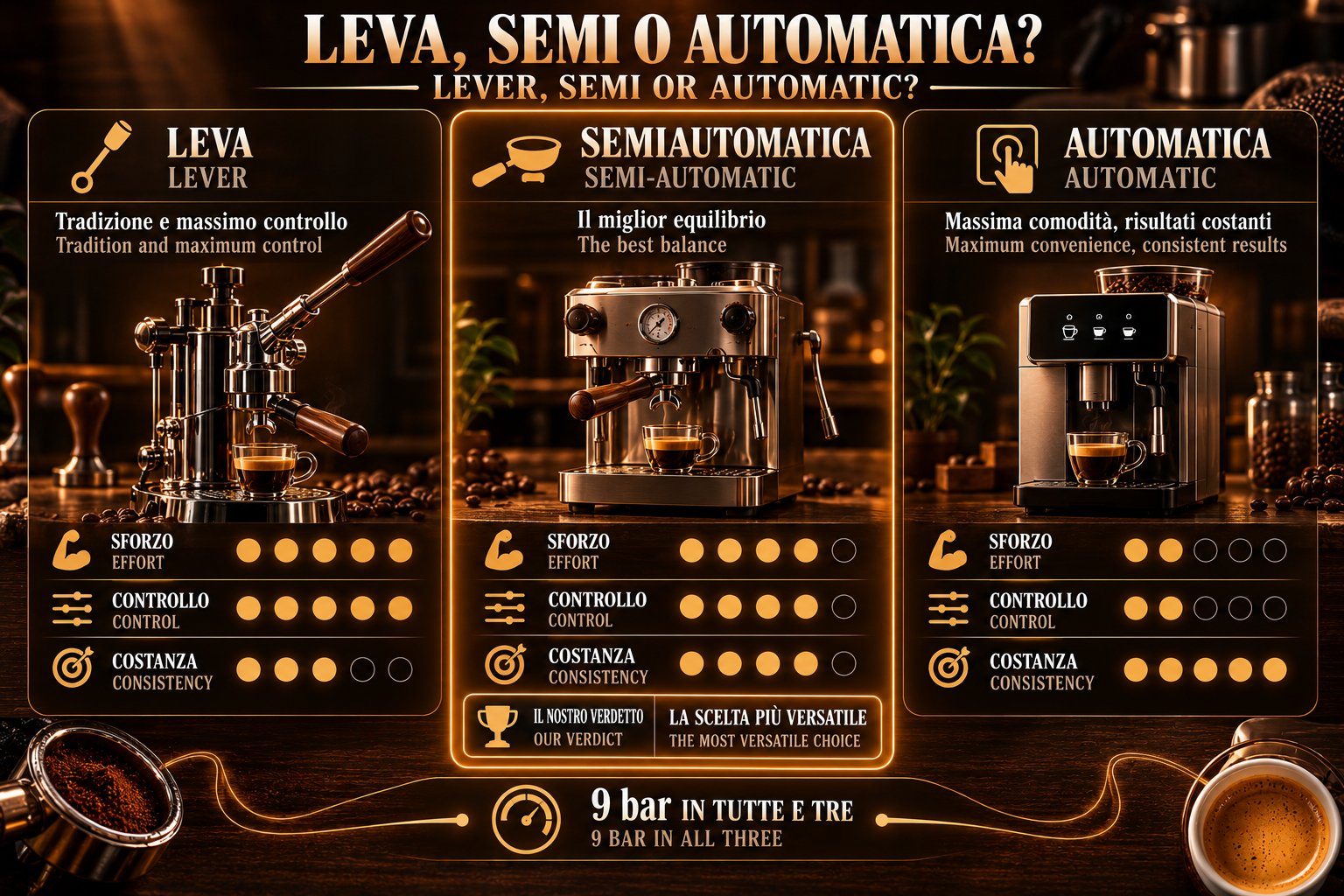
Table of contents
- The lever: you pump, you control pressure and time. The semiautomatic: pumps at 9 bar, you grind, dose and tamp. The superautomatic: you press a button.
- Little time and no desire to learn: superautomatic. Time to give and curiosity: lever or semiautomatic.
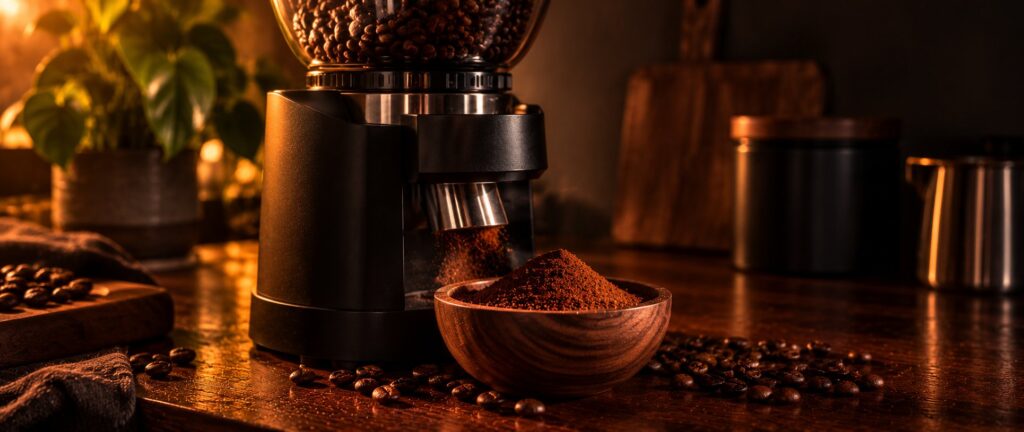
- The format counts, but the grind matters more than any other single variable: then you buy the grinder and start measuring.
Lever vs semiautomatic: the three families in one line
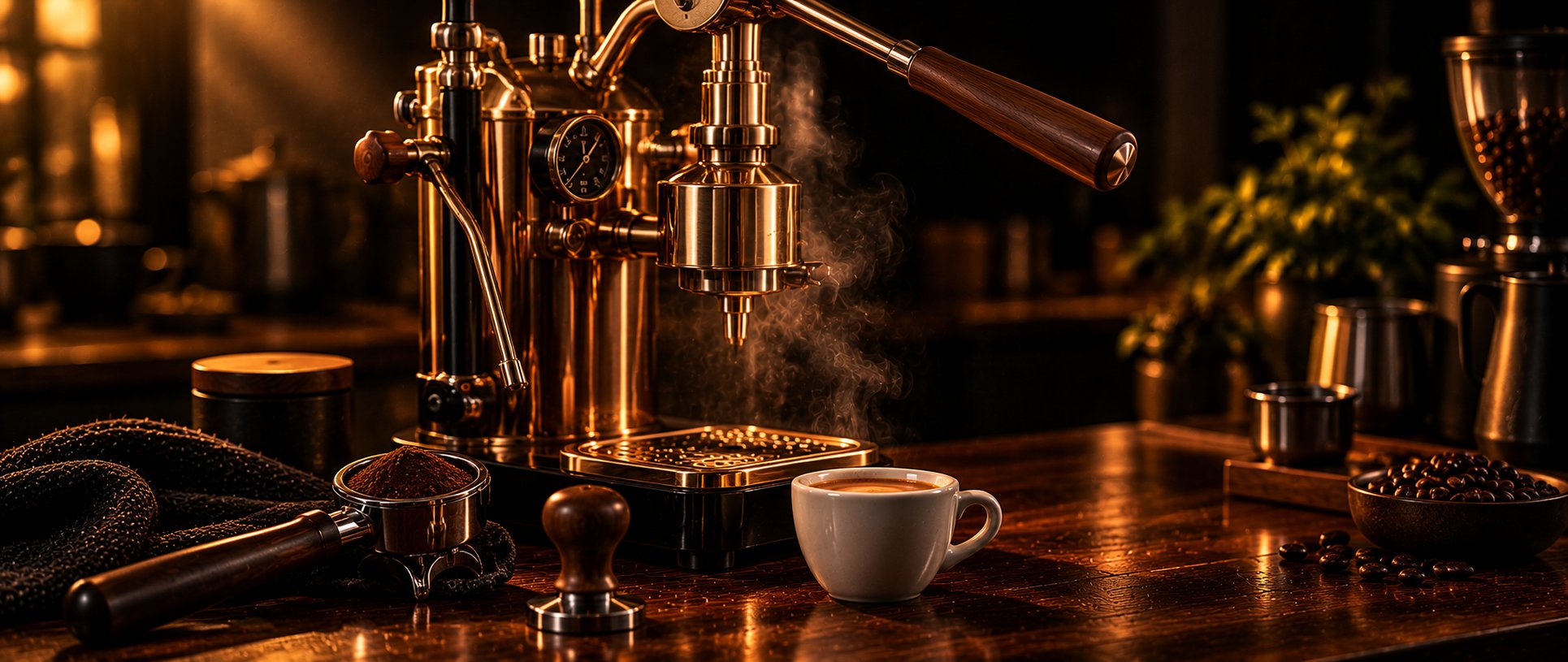
- Lever: you pump, you control pressure and time. The coffee is the result of your gesture. It is the most demanding machine and the most rewarding for someone who wants to learn.
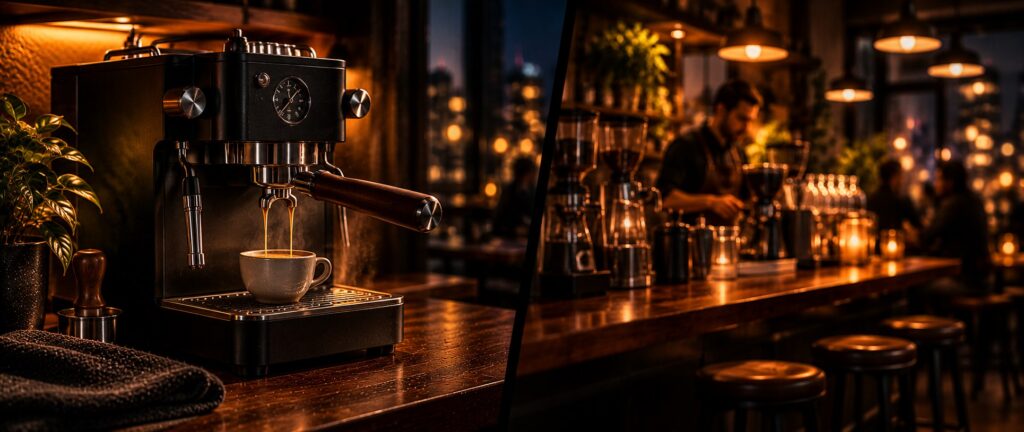
- Semiautomatic: the machine pumps at 9 bar and gives the steam; you grind, dose and tamp. It is the standard format for someone who wants to improve without giving up control.
- Automatic / superautomatic: it grinds, doses, tamps and extracts on its own. You press a button. You trade learning for convenience.
Lever: for someone with time and curiosity
How it works
The lever machine (the Pavoni Europiccola) has no pump: the pressure comes from your arm on the lever.
The result is that every extraction is a gesture: you pull the lever and meter the force by feel.
Why it ages well
At equal price it is the machine that ages best, because it has no electronics to break: lever pump, brass group, valves.
When to choose it
But it requires attention: a shot that runs too fast tastes sour and thin; one that drags long tastes bitter.
Choose the lever if coffee is a ritual, not a hurry. If you have two minutes in the morning and want the coffee before stepping out, the lever slows you down and is not the right choice.
If instead coffee is the moment of the day when you sit down, the lever will give you a coffee no superautomatic matches.
Semiautomatic: the balance point
The standard format
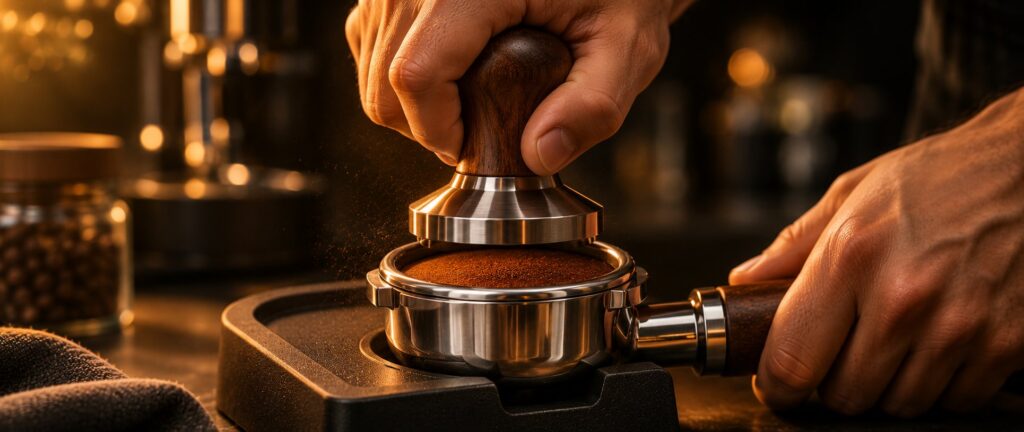
The semiautomatic is the format where most home barists really begin. The machine heats, pumps at 9 bar and gives the steam, and you decide the grind, the dose and the tamping.
It is the format with the densest spares network (especially in Italy). The learning curve is the steepest, but the quality at equal price is the best: you are not paying the electronics of a superautomatic.
The De’Longhi La Specialista Arte and the Gaggia Classic Pro are the espresso machines most chosen in this range.
When to choose it
The semiautomatic is the right choice if you want to learn and experiment, but with a good result right away.
In a month of consistent dial-in the quality jump is clear, and the machine holds it for years.
Automatic and superautomatic: the convenience
The automatic (and the superautomatic) is the choice for someone who wants a good coffee without technique: you press a button, the machine grinds the bean, doses, tamps and extracts.
It is the solution for the home where coffee is a quick routine, one or two drinks a day, with no desire to learn.
The limits are the internal grinder (generally less even than a dedicated grinder), the price (from 500 to over 4,000 euros) and the repair.
Being almost all electronics, an out-of-warranty service visit weighs.
Lever vs superautomatic: head-to-head comparison
The most common question is the difference between the two extremes: the lever and the superautomatic. Here is the direct, point-by-point comparison.
| Aspect | Lever | Superautomatic |
|---|---|---|
| Who controls the extraction | You: pressure and time | The machine: electronics |
| Time per cup | 3–5 min | 1–2 min |
| Learning curve | Steep | Almost none |
| Quality ceiling | Very high, depends on your hand | Moderate, depends on the built-in grinder |
| Budget | €400–1,200 | €500–4,000 |
| Maintenance | Valves and gaskets | Technical service |
| Resale value | High, sells well used | Low |
| The coffee “moment” | A ritual | A routine |
Bottom line: the lever gives you control and the highest quality ceiling in exchange for time and practice; the superautomatic gives you speed and zero technique in exchange for a lower quality ceiling.
If coffee is a ritual choose the lever; if you are in a rush choose the superautomatic.
Lever or semiautomatic: which to choose (three questions)
Three questions, three columns: the answer falls out of the rows.
| Question | Lever | Semiautomatic | Superautomatic |
|---|---|---|---|
| How much time in the morning? | More than 5 min | 3–5 min | Less than 2 min |
| How much do you want to learn? | A lot | A lot | A little / none |
| Budget (machine) | €400–1,200 | €300–1,000 | €500–4,000 |
| Maintenance | Valves, gaskets | Gaskets, descaling | Technical service |
| The “moment” of coffee | A ritual | A short ritual | A routine |
The answers to these three questions settle it.
Little time and no desire to learn: superautomatic. Time to give and curiosity: lever or semiautomatic. The lever if the gesture fascinates you, the semiautomatic if you want the good result right away and the dense spares network.
Then, in both cases, you buy the grinder and start measuring: the format counts, but the grind determines 70% of the quality. If you are aiming for a semiautomatic on a tight budget, the guide to espresso machines under 300 euros explains what to ask (and what not to) at that price.
In the home espresso machine section you find the complete guide to price ranges, and in the how to make a good espresso section the step-by-step dial-in.
Updated: 26-10-2026
The machines in the comparison, if you want to try them (selected from official specs)
| Product | Feature | Best for | |
|---|---|---|---|
| De'Longhi Dedica EC685 | Thermoblock, compact | The compact compromise in the guide | View on Amazon |
| Gaggia Classic Pro | 58 mm brass group (not E61) | The reference semiautomatic | View on Amazon |
| De'Longhi La Specialista Arte | Built-in grinder | The convenient one with a grinder | View on Amazon |
Steam: what actually differs between lever and semiautomatic
Verdict: if you make milk drinks often, the classic lever is the weakest of the three. Steam is the price of the lever’s design.
On a lever, steam shares the boiler with extraction: after a shot you wait some minutes for pressure to recover.
On E61 lever machines the wand is readier, but the flow stays gentler than a good heat-exchanger semiautomatic.
Two spec-sheet lines matter: wand tip diameter and boiler type. Thin wand tips take nearly twice as long to heat a milk cap as a bar-style wand.
A semiautomatic with PID and exchanger is the compromise you can live with daily without thinking about it.
A superautomatic froths milk with one button, at a different texture: fine for speed, not for latte art. The grinder matters less for milk than milk freshness does.
Real costs after purchase: spares and maintenance
Verdict: levers need planned maintenance; superautomatics fail unpredictably.
A well-kept lever asks for a group gasket every two or three years: tens of euros and half an hour. Widely sold models publish spare part codes, which is your signal you will find them.
On a semiautomatic maintenance is nearly all descaling and rinsing. The real risk is scale locking machines without a three-way valve: then only the service centre fixes it.
On a superautomatic the spares line is the least predictable of the three. Before paying, check the price of the complete brew group: it decides whether the machine will be repairable or replaceable.
On power use the gap is real but small: standby costs more than the whole lever-versus-automatic choice.
Resale Value and Long-Term Costs
Verdict: a common brand resells at half price within two weeks, a rare machine stays in the basement with its manual.
Before buying, check two things on the maker’s site: whether exploded diagrams are published and whether gasket kits are sold as spares. If not, every repair becomes a support-ticket fight.
Italian handmade levers hold value, but only models with parts in the catalogue. Mid-band semiautomatics lose 40-50 percent in two years: that is the price of being common.
The superautomatic is the exception you do not want: it sells well while it works, then value collapses at the first brew-group failure.
That is why this site weighs price against spare availability more than the marketing sheet: see how the machines under €300 and the grinders under €100 were selected.
Frequently asked questions
What’s the difference between a lever and an automatic espresso machine?
On a lever you do the pumping: you control pressure and time, and each extraction is a gesture (3–5 minutes a cup). Automatic and superautomatic machines grind, dose, tamp and extract on their own: you press a button.
The lever has a higher quality ceiling and ages better because there is no electronics; the superautomatic gives speed with a ceiling set by its built-in grinder.
Is a lever machine a good idea if I have little time in the morning?
No: between warming up, dosing and pulling, a lever takes more than 5 minutes a cup — it is a ritual, not a rush.
If you have two minutes in the morning, a superautomatic or a good compact semiautomatic is the right choice.
How much does a lever espresso machine cost?
Indicatively between 400 and 1,200 euros, versus 300–1,000 for a semiautomatic and 500–4,000 for a superautomatic.
At the same price, the lever is the machine that ages best: no electronics to break, just the lever pump, brass group and valves.
Semiautomatic or superautomatic for beginners?
If you want to learn with good results from day one, the semiautomatic: it has the densest spare-parts network in Italy and the best quality at the same price, because you don’t pay for a superautomatic’s electronics.
If you only want to press a button, the superautomatic — but out of warranty a repair weighs a lot.
Go deeper: milk frother, if steam is not enough.
More useful spares and accessories for this article
| Product | Feature | For whom | |
|---|---|---|---|
| Gaggia MD15 | Conical burrs, compact | First electric grinder | View on Amazon |
| Tipre scale with timer | 0.1 g / 2 kg, timer | Weigh dose and yield from day one | View on Amazon |
| 58 mm tamper | Steel, constant pressure | A flat, square tamp every time | View on Amazon |
| Borbone ESE pods Light 150 | Compostable, -50% caffeine | ESE without the sleepless night | View on Amazon |
| WECOOK Paola 1-cup | Aluminium, single serving | One cup, zero waste | View on Amazon |
| Mini milk jugs 2×100 ml | Ceramic, 100 ml | Serve milk and syrup in portions | View on Amazon |
| Flintronic TDS meter | Digital, ±2% | Measure your water first | View on Amazon |
| Set 12 porcelain cups | 80 ml, dishwasher safe | Espresso deserves proper cups | View on Amazon |
| Airtight jar 1.5 L | Steel, holds 650 g | The week's supply, sealed | View on Amazon |
As an Amazon Associate I earn from qualifying purchases. Note: some links on this site are affiliate links: if you buy through them, I may earn a commission at no extra cost to you. Affiliate links never influence my recommendations.